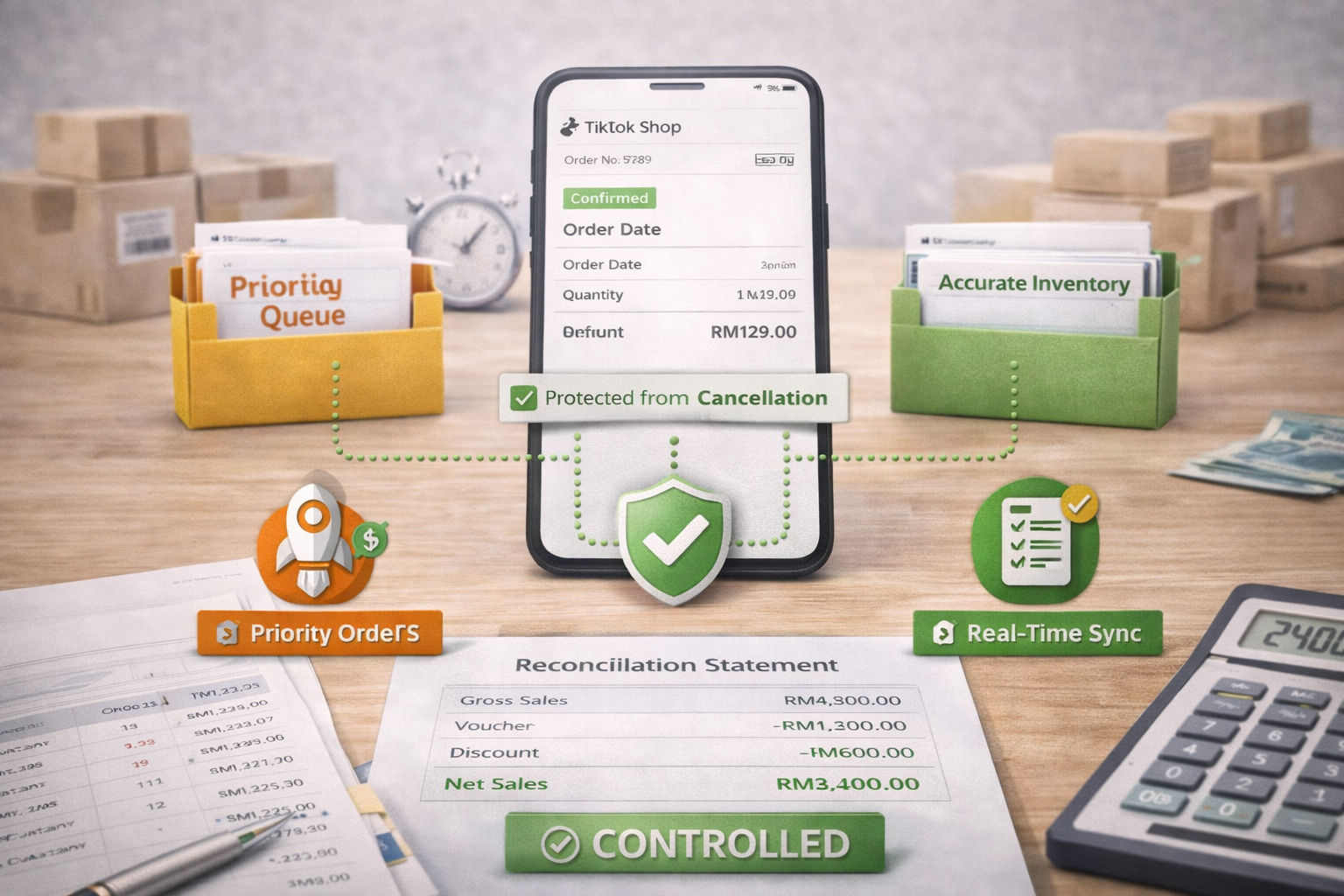
For businesses selling on TikTok Shop, one of the most critical metrics to monitor is the cancellation rate. While a certain level of cancellations is inevitable, an unusually high cancellation rate can lead to serious consequences, including:
- Loss of customer trust.
- Negative reviews.
- Reduced visibility and shop performance on TikTok Shop.
- Increased operational costs and inefficiencies.
The key to managing this challenge lies in implementing effective operational controls that proactively minimize cancellations while maintaining a positive customer experience. In this article, we will discuss:
- The impact of high cancellation rates on your TikTok Shop performance.
- The main causes of cancellations on TikTok Shop.
- Proven operational controls that reduce cancellations at scale.
- Best practices to monitor, prevent, and handle cancellations effectively.
By the end of this article, you’ll have a complete set of tools and strategies to protect your TikTok Shop from excessive cancellations, helping you maintain a healthy cancellation rate and improve your shop’s performance.
Why Cancellation Rates Matter on TikTok Shop
TikTok Shop has strict performance metrics to ensure that sellers provide the best possible experience for customers. Among these metrics, cancellation rate plays a significant role in determining how well a seller is performing on the platform.
1. Impact on Seller Performance
Your cancellation rate directly impacts your shop’s visibility, ranking, and eligibility for TikTok’s promotional features. If your cancellation rate exceeds a certain threshold (usually 5% or higher), TikTok may take punitive actions, such as:
- Lowered product visibility in search results.
- Reduced participation in promotional campaigns.
- Potential suspension of your shop or account.
A high cancellation rate signals to TikTok Shop that your orders are not being fulfilled in a timely manner, which can negatively affect the platform’s reputation for reliability.
2. Customer Trust and Loyalty
Frequent cancellations can harm your relationship with customers. If buyers experience regular cancellations, they may lose confidence in your store and seek alternatives, leading to a decrease in repeat purchases and negative reviews.
3. Increased Operational Costs
When an order is cancelled, it incurs both operational and financial costs, including:
- Inventory management overheads: Managing and restocking returned products.
- Shipping charges: Both the return of cancelled items and the cost of handling cancellations can accumulate.
- Refund processing: Customer service teams need to handle refunds, which takes time and resources.
Ultimately, these costs can affect your profitability and negatively impact your operational efficiency.
Common Causes of Cancellations on TikTok Shop
Before implementing controls, it’s crucial to understand what causes cancellations on TikTok Shop. By addressing the root causes, you can take proactive measures to prevent them.
1. Inventory Issues
A lack of accurate stock tracking is one of the most common causes of cancellations. If a customer orders an item that appears in stock but is actually out of stock, the order will need to be cancelled. This could happen if:
- Inventory records are not updated in real-time.
- Items are oversold due to a lack of real-time stock syncing.
- Stock is not physically available due to warehouse or supply chain issues.
2. Order Fulfillment Delays
Sometimes, sellers don’t fulfill orders in time, leading to cancellations. Common reasons for this include:
- Logistics or shipping delays.
- Lack of warehouse staff or poor warehouse processes.
- Delivery service disruptions or third-party courier delays.
3. Payment Failures
Orders may be cancelled if payment does not go through properly. Common issues include:
- Payment gateway errors.
- Insufficient funds or expired payment methods.
- Customer issues with payment authentication.
4. Product Listing Errors
Inaccurate product listings can lead to cancellations. If there’s a mismatch between what the customer expects and what is provided, cancellations often occur. These issues include:
- Incorrect product descriptions (size, color, quantity).
- Incorrect pricing (e.g., a product is listed at an incorrect price, and TikTok Shop cannot honor the order).
5. Customer Cancellations
Customers themselves may cancel orders due to a change of mind or delayed delivery. This is common in cases where the delivery timeframes are not clearly communicated, or if the customer finds a better deal elsewhere.
How to Implement Effective Operational Controls to Protect Against Cancellations
Now that we’ve identified the common causes of cancellations, let’s look at the operational controls that can help prevent them and reduce their frequency.
1. Real-Time Inventory Management
Accurate and real-time inventory tracking is the cornerstone of reducing cancellations. If your inventory isn’t updated live, you’re more likely to oversell products and promise stock that doesn’t exist.
Best Practices:
- Use inventory management software that integrates directly with TikTok Shop to ensure real-time syncing between your platform and warehouse.
- Ensure stock quantities are adjusted automatically after each sale, and that stock is reserved for pending orders.
- Implement buffer stock rules to protect against overselling, especially for fast-moving products.
- Conduct frequent inventory checks, especially before promotions, to verify that the stock levels are correct.
By doing this, you reduce the risk of overselling and ensure that stock availability in your store reflects the true amount of inventory you have.
2. Clear and Accurate Product Listings
Ensure that your product listings are clear, complete, and accurate. Misleading or inaccurate listings are one of the main causes of customer dissatisfaction, leading to cancellations.
Best Practices:
- Use high-quality images and detailed product descriptions to set the right expectations.
- Ensure that sizes, colors, specifications, and other details are clearly outlined to prevent customer misunderstandings.
- Double-check pricing to ensure consistency and avoid errors that could lead to cancellations.
- Regularly update your stock status (available, low stock, out of stock) to give customers accurate information before they check out.
This reduces the chance of customers cancelling because of incorrect expectations or confusion.
3. Improve Order Fulfillment and Shipping Efficiency
The faster and more reliably you can fulfill orders, the fewer cancellations you will face. Timely order fulfillment is especially critical during high-volume events, such as flash sales or TikTok live sessions.
Best Practices:
- Streamline your order fulfillment process by optimizing your warehouse operations.
- Integrate with reliable third-party couriers and monitor their delivery timelines closely.
- Offer multiple shipping options, such as express shipping or standard shipping, and provide real-time tracking to customers.
- Be transparent about delivery timelines and stock availability, especially during busy periods.
Timely fulfillment helps ensure that customers receive their orders quickly, reducing cancellations due to delays.
4. Automated Payment Verification and Alerts
Payment failures can often result in cancellations, but many of these can be prevented through automation and system integration.
Best Practices:
- Use automatic payment verification tools that check the status of payments in real-time and flag any failed payments before they’re processed.
- Set up email alerts or SMS notifications to inform customers about any payment issues, allowing them to resolve the issue before it causes an order cancellation.
- Integrate with reliable payment gateways that offer strong fraud prevention tools to reduce payment failures and disputes.
This ensures that cancellations due to payment issues are minimized and that customers are alerted to any issues before they become problems.
5. Customer Communication and Transparency
Clear communication is essential to reducing customer-initiated cancellations. Customers are more likely to cancel if they are uncertain about shipping times or if they’re kept in the dark about the status of their order.
Best Practices:
- Send order confirmation emails and shipping updates with accurate delivery timelines.
- Set expectations clearly about when customers should expect their order to be shipped and delivered.
- Offer easy ways for customers to cancel or modify their orders before they are processed, allowing them to feel more in control of the process.
- Include customer service contact information and encourage buyers to reach out with any issues before automatically canceling orders.
By improving your communication, you reduce the likelihood of customers canceling due to dissatisfaction with delivery or other factors.
How to Track and Monitor Cancellations
Monitoring your cancellation rates and tracking the reasons for cancellations is key to preventing future issues.
Best Practices:
- Regularly monitor cancellation reports from TikTok Shop to identify trends.
- Create a cancellation reason category (e.g., out of stock, shipping delays, customer request) to analyze why orders are being canceled.
- Track your cancellation rate and set a threshold (e.g., 2-3%) to identify when action is needed.
- Use customer feedback from canceled orders to identify areas for improvement in your processes.
This data will help you spot patterns and implement targeted solutions to lower your cancellation rate.
Common Mistakes to Avoid in Cancellation Rate Management
1. Ignoring Inventory Accuracy
Failing to update your stock or syncing inventory poorly leads to overselling, which leads directly to cancellations.
2. Lack of Clear Shipping Information
If customers are unsure about delivery timelines or shipping methods, they may cancel the order.
3. Insufficient Customer Support
Not having a clear and responsive support system in place can lead to increased cancellations due to customer dissatisfaction.
4. Overlooking Refund Policies
Not properly managing refund and return policies can cause confusion and lead to cancellations when customers feel their concerns aren’t addressed.
Conclusion: Protecting Your Cancellation Rate with Operational Controls
TikTok Shop cancellations can become a major issue if not properly managed, impacting your business’s financial health, customer satisfaction, and shop performance. By implementing the right operational controls, you can significantly reduce cancellations and ensure smoother order fulfillment.
Here’s a quick recap of key steps:
- Real-time inventory management to prevent overselling.
- Clear product listings to ensure customer expectations are set correctly.
- Efficient fulfillment processes to meet shipping deadlines.
- Automated payment verification to reduce failed payments.
- Transparent customer communication to manage expectations.
By applying these operational best practices, you’ll not only protect your cancellation rate but also improve your overall TikTok Shop performance, increase customer loyalty, and streamline your business operations.